Wednesday, April 10, 2024

A trip to London, and Justice Jones

 Our family took a trip to London in February, which included visiting the sister of one of Adam's high school friends and her family. While we were chatting, I (of course) brought up the topic of books. I asked what their teenage daughter is reading these days. They mentioned two series that she had read and enjoyed: Murder Most Unladylike (I had already read these and loved them), and Justice Jones (mystery lovers might recognize Elly Griffiths's name, as she also wrote the Ruth Galloway series, among other novels). 

Considering how much I enjoyed Murder Most Unladylike, I knew that I had to try to get my hands on the Justice Jones books. Unfortunately, they do not seem to be published in the US. I checked a couple of bookstores in London: a branch of Waterstones near the Tower of London, and the Holland Park branch of Daunt Books. We were only in London for four full days, not counting the day we spent with our friends, so I didn't have a lot of time to check other bookstores. Unfortunately, neither of those stores had Justice Jones in stock. Blackwell's to the rescue! I ended up ordering them from our hotel room on our last night in London.

This morning I finished the first Justice Jones book and ... it was fine. It was readable, but I didn't feel as compelled to read it as I did with the later entries in the Murder Most Unladylike series. However, I remember feeling similar about the first MMU book, so I'll keep going. There are only four books in the series so far and they're not terribly long. P also seems to have a penchant for mysteries/spooky books, so I hope in a couple more years she'll be interested in reading both series.

Another note about our London trip: I wasn't able to make it to the Marleybone location of Daunt Books, but I hope to be able to return to London soon so I can visit it. Doesn't it look amazing?

Tuesday, September 20, 2011

Book Review: Bad Intentions by Karin Fossum

Title: Bad Intentions
Author: Karin Fossum
ISBN: 978-0-547-48334-4
Pages: 213
Rating: 7/10

Summary: A young man named Jon who is recovering from a mental breakdown drowns in a lake in Norway while on a weekend trip with two friends. At first it seems to be a suicide, but Inspector Konrad Sejer has his doubts. When another young man's body is found and Sejer discovers a connection between the two, Sejer and his partner, Detective Jacob Skarre, must determine how involved Jon's friends were in both deaths.

Review: I discovered Karin Fossum in 2007 when the Washington Post featured her novel The Indian Bride in a story about international crime novels. Since then, I've read as many of her English translations as I could find, with the exception of Don't Look Back, which is currently sitting on my bookshelf.

Fossum's books aren't quite as raw as Steig Larsson's and Henning Mankell's. The setting can be bleak, especially when they take place during the winter months. But despite their sometimes harrowing plots, her books don't have quite the sense of cynicism that a lot of Scandinavian crime fiction does.

One difference between Bad Intentions and some of the previous Fossum books I've read is that there's not quite as much background about Sejer's personal life in this one. He occasionally mentions his wife, who's passed away, and his grandchild, but this book focuses more on the victims and their families than on the detectives. There are some moving domestic scenes that involve the mothers of the two dead young men.

Sejer's partner, Detective Jacob Skarre, doesn't play as large of a role in this book as in the previous ones, but I did enjoy the scenes he was in. His youth and energy provide a perfect counterpoint to Sejer's occasional jaded cynicism. I've enjoyed watching their relationship and rapport develop.

The Indian Bride is still my favorite Fossum novel; it's one of the saddest, most moving detective novels I've ever read. But Bad Intentions is also enjoyable. I don't think I've read a Karin Fossum novel yet that's disappointed me.

Friday, September 16, 2011

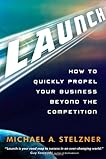
Book Review: Launch: How to Quickly Propel Your Business Beyond the Competition by Michael A. Stelzner

Launch: How to Quickly Propel Your Business Beyond the CompetitionTitle: Launch: How to Quickly Propel Your Business Beyond the Competition
Author: Michael A. Stelzner
ISBN:  978-1-118-0273-3
Pages: 255
Rating: 9/10 for business application; 7/10 for reading pleasure

Review: This book outlines a practical marketing methodology with realistic examples to show how these guidelines can be applied.

I've never felt comfortable with the idea of clobbering potential customers with marketing messages, which seems to be a standard operating procedure among many businesses today. Does anyone really like being the target of an aggressive marketing campaign? I know I don't. So Stelzner's philosophy of marketing by building strong connections and developing good content, rather than cold calling and cramming content full of marketing messages, made intuitive sense to me.

Stelzner goes into detail about how different categories of content can help build your business with specific examples of each and tips for how to create them. He also devotes a few chapters to the importance of engaging other people and building reciprocal marketing relationships.

Although I quickly tired of the extended rocket ship metaphor, the ideas and applications in this book make it well worth reading for anyone who wants to understand how to interact more effectively with current and potential customers.

Thursday, September 15, 2011

Book Review: The Language of Flowers - Vanessa Diffenbaugh

Title: The Language of Flowers
Authur: Vanessa Diffenbaugh
ISBN: 978-0-345-52554-3
Pages: 322
Rating: 8/10

Summary: Victoria Jones is a product of the foster-care system. Shuttled from home to home as a child, she trusts no one and won't let anyone get close to her. Her primary means of communication is through flowers, whose meanings she's become obsessed with.

Once she turns 18, she is emancipated and, with nowhere to go, creates a makeshift home for herself in a local park. Her gift for flowers eventually helps her land a job at a flower shop, where her services are soon in great demand by people who need help in their personal lives.

The only way Victoria knows how to communicate with people is through flowers, but the recipients of her messages don't always understand what she's saying. When she discovers that some flower dictionaries give flowers contradictory meanings, she becomes momentarily disoriented until she decides to create her own dictionary.

As Victoria's new life unfurls, we learn more about her experiences in foster care that have shaped her adulthood. When she meets a man who is a link to her past, she must decide whether she can forgive herself for a childhood misdeed that hurt the only person she's ever loved and give herself a chance at happiness.

Dahlia: Dignity

Review: The Language of Flowers is a beautifully written coming-of-age novel that will have readers rooting for its protagonist from page one. Victoria is a well-developed, complicated character who's had a past in which not many children would thrive, but she has the strength to do what she has to not only to survive, but to give herself a happy, fulfilling life--if she can stop sabotaging herself at every turn.

Lily: Majesty
I don't know a whole lot about the foster care system so I don't know if it's normal for foster kids to have the experiences Victoria does. Not only does she find it difficult to fit into any of the prospective families she's sent to, but even her social worker seems more interested in checking a box next to Victoria's name than in understanding or helping her.

Zinnia: I mourn your absence
As a flower-obsessed gardener, I enjoyed the flower meanings woven through the plot. While I was disappointed that two of my favorite flowers, hydrangea and peony, mean "dispassion" and "anger," respectively, I was happy to learn the meanings of other favorites: ranunculus means "You are radiant with charms," pink rose means "grace," and tulip means "declaration of love." I'm certainly not going to rip out my peony and hydrangea shrubs, but I might ensure that they're well-surrounded with ranunculus, pink roses, and tulips to balance them out!

Phlox: Our souls are united

Wednesday, September 14, 2011

The Fellowship of the Ring discussion, part I


I'm jumping into the Lord of the Rings readalong a little late. I read this LotR for the first time in junior high and liked it, but I think a lot of it went over my head. I listened to the unabridged audiobooks a few times and reread excerpts in college when I wrote a paper about JRR Tolkien for an Old English class, but this is the first time since junior high that I've reread the whole text rather listening to it.

1. Hobbits seem to have songs for everything!  I didn’t realize this was a musical. . . . how are you liking all the songs?
The first time I read this book, I skipped over all the songs. But listening to the audiobooks and writing a research paper about Tolkien's relationship to languages gave me a whole new appreciation for them. Tolkien understood the importance of the sounds of words. I think one of the most well-known anecdotes about Tolkien is his love for the phrase "cellar door":
Most English-speaking people, for instance, will admit that cellar door is 'beautiful', especially if dissociated from its sense (and its spelling). More beautiful than, say, sky, and far more beautiful than beautiful. Well then, in Welsh for me cellar doors are extraordinarily frequent. [JRR Tolkien, from a 1955 lecture about English and Welsh]
This time, I've been taking my time reading the songs, paying attention to the sound of the words and the way it feels to say them out loud. One of my favorites is the elf song in Chapter 3:
Snow-white! Snow-white! O Lady clear!
    O Queen beyond the Western Seas!
O Light to us that wander here
    Amid the world of woven trees!

Gilthoniel! O Elbereth!
    Clear are thy eyes and bright thy breath,
Snow-white! Snow-white! We sing to thee
    In a far land beyond the Sea.

O stars that in the Sunless Year
    With shining hand by her were sown,
In windy fields now bright and clear
    We see your silver blossom blown!

O Elbereth! Gilthoniel!
    We still remember, we who dwell
In this far land beneath the trees
    Thy starlight on the Western Seas.
This song gives me goose bumps not just because of its tone of melancholic longing, but because of the sounds of the words and the way Tolkien constructed the stanzas. Beautiful.

Of course, "The Road goes ever on and on"--the whole song, but even that one line. If you think about all the different ways you can rephrase that line: "The road goes on forever," "The road keeps on going," etc.--the care Tolkien took in constructing individual phrases is clear.

2. I love that we learn about Gollum and his past so early on. It gives a dark and foreboding (dare I say, perilous?) feeling to the whole thing. Were you surprised that the story took a dive towards the dark and scary so quickly?
This is something that struck me the first time I read these books. I remember starting out with the birthday party and thinking it the series was going to be an extended version of The Hobbit, which never really gets dark. But the Gollum chapter, and the early appearance of the Black Riders, makes clear right away that this series is much darker, more foreboding and more complicated than The Hobbit. I think this is why Lord of the Rings stands up much better to rereading than The Hobbit, in my opinion.
3. Tom Bombadil!  what and who is he???  If you met him in a forest, would you trust him?

I would definitely trust Tom Bombadil. I know a lot of readers dislike him, but the thing about Tolkien's world is that the division between good and evil is pretty clear. Sure, you have good characters who falter (e.g., Bilbo's behavior while Gandalf is convincing him to leave the ring behind) or bad characters for whom you might feel some pity (e.g., Gollum). But with most of Tolkien's characters, virtue or lack thereof is pretty obvious. So when a jolly little man comes bouncing into the scene singing happy songs and saving hobbits from hobbit-eating trees, I'd be inclined to trust him.

One thing that was interesting about reading the Tom Bombadil chapter after listening to the audio books is that I realized that even when Tom's speech isn't represented in stanzas in the text, he still speaks in song. For example, his speech to Old Man Willow when he's rescuing Pippin and Merry:
Old Man Willow?
Naught worse than that, eh?
That can soon be mended.
I know the tune for him.
Old grey Willow-man!
I'll freeze his marrow cold,
if he don't behave himself.
I'll sing his roots off.
I'll sing a wind up
and blow leaf and branch away.
Old Man Willow!

You let them out again,
Old Man Willow!
What be you a-thinking of?
You should not be waking.
Eat earth! Dig deep!
Drink water! Go to sleep!
Bombadil is talking!"
In the book this speech is presented as in-line with the rest of the text, not set off like the other songs, so when I read it as a teenager I didn't notice the unique rhythm of Bombadil's speech. This is another aspect that I think is enhanced by listening to the audiobooks--Rob Inglis, who narrates them, does an excellent job with Tom Bombadil's speech. 
As far as what or who Tom is, I suppose Goldberry's explanation that he is "Master of wood, water, and hill" is going to be the best explanation we get in this book. I'm most intrigued by the fact that he doesn't disappear when he wears the ring, and he can see Frodo when Frodo is wearing it, though no one else can.
4. What did you think when Pippin, Merry and Sam told Frodo about their “conspiracy”, and that they pretty much knew what he was planning from the beginning?
I was concerned about Frodo's ability to get the ring to Mordor without any of the baddies discovering him ;) But it's also reassuring to learn that Pippin, Merry, and Sam are so loyal and determined, and that they at least have an inkling of what they're getting themselves into but want to help Frodo anyway.
5. What’s your favorite part of the book so far?
I really love the language. I've said it before, but the care Tolkien takes in constructing even the smallest elements of the text makes this the perfect book to savor. Even some of the chapter names are lovely: "Fog on the Barrow Downs," "The Shadow of the Past," "A Conspiracy Unmasked." The wonderful story and characters, for me, are bonuses--but then I was an English major and am kind of a nerd about that sort of thing.

Monday, September 12, 2011

Amazon Book Rentals vs. Your Public Library

Apparently Amazon is looking into opening a lending library for digital books--for a fee. Sort of. It would be part of their Amazon Prime membership, which currently runs $79/year and also includes two-day shipping and video streaming. Today's Publishers Weekly news blog wonders whether this service might signal big problems for public libraries.

Amazon seems to be early in the planning stages so who knows if it will actually happen, but I'm not exactly sure what the point is or whether it's a viable idea. Don't most public libraries now offer digital collections to card holders for free?

I also think it's interesting that some publications are referring to this possible new Amazon service as "Netflix for Books." Hmmm ,where have I heard that before? BookSwim, another book rental service, has been touting itself as a Netflix-style book rental service for years. I tried BookSwim not once, but twice, while I lived in an area that did not have a good public library system, and my conclusion was that other than the fact that their product arrived (eventually) via mail, they were nothing like Netflix. Their selection wasn't great, their queuing system was screwed up, shipping took forever, and their pricing plans were significantly higher than Netflix plans.

The combination of these factors meant that I could more cost effectively buy the books I wanted to read. In the case of BookSwim, some of these shortcomings are necessary: it's a lot more expensive to ship books than DVDs, for example. This would be a nonissue with electronic books. But the selection is a sticking point for me, and that could be just as much of a problem with renting ebooks from Amazon is with renting paper books from BookSwim.  So my reaction to Amazon being described as "Netflix for books" is, "I'll believe it when I see it."

I read a lot of books that are not available electronically, or that are way too expensive to buy in an electronic format. The subscription fee would negate the price-per-book issue, but would publishers who insist on putting price points of $18+ on ebooks agree to giving customers unlimited access to their content for a mere $79/year? Which ALSO includes shipping and streaming video? Just how much would readers be willing to pay for an electronic book subscription service if they have access to a decent public library?

Here are a couple selections from the blog post:
Though Amazon’s digital library is still in its very early stages, and though it’s yet to be seen if the idea hits roadblock getting publishers to cooperate, it’s time to speculate about the future of libraries. In 10 years, what will be the closest thing to a library? Will the image the word evokes change from the one we all once had–a person sitting quietly rapt at a table, poring over a book (either for research or pleasure) while surrounded by shelves and shelves of more books–to an image of a person, never leaving his or her house, pressing a series of buttons on a high-res Amazon tablet screen to check out a lent book, scanning the lines using the device’s backlight instead of the low ceiling lights of a library?
NOOOOOO! The specter of trading my beautiful public library in for a tablet screen will encourage me to keep donating whatever I can to my public library. But there's a big caveat in this paragraph: Amazon is just in talks with publishers and as far as I've seen, none have signed on yet. That's a huge obstacle in the way before this idea can become in any way viable.
But can local branches, many already running dry, survive if Amazon gives Prime, which is becoming more and more of a deal at $79 as it decorates its price tag with feature after feature, and its users the capability to access any book a library could provide, without having to leave one’s home? Publishers, reportedly worried that Amazon’s digital library will devalue books in the eyes of consumers, obviously have the rights to the books and can put the brakes on the plan. But once one publisher signs, and assuming it finds success, expect a flood of others to follow. And really, it’s hard to imagine a feature that puts books right in front of your nose and charges you no additional cost not taking off.
Yes, Prime is a good deal now and would be an even better deal with digital book rentals thrown in--IF that price point sticks. I think it's unlikely that the Big 6 publishing companies would sign off without a huge payout, and Amazon would have to come up with that cash somehow. Probably by raising the Prime subscription price.

Maybe I'm in denial because the idea of libraries failing makes me shudder. The amount of weight Amazon decides to throw around to get this done, combined with the level of desperation within the major publishing companies could make this project viable. I just think it's unlikely that this service would be the end of public libraries or paper books.

Wednesday, September 7, 2011

RIP VI: Death of a Gossip by MC Beaton

As I mentioned yesterday, I became hooked on MC Beaton's Agatha Raisin series a couple years ago. I almost got caught up on that series, which currently spans 21 novels, earlier this year; but then I had to take a break.

Now that fall is rolling around, I decided to pick up the most recent Agatha Raisin book--the only one I hadn't read--from my library, and I also decided to get started on Beaton's other popular series about the Scottish police constable Hamish Macbeth.

For some reason Death of a Gossip is no longer in print in the US, but my library still has the first edition hardcover from 1985. I started it last night and finished it tonight.

The premise of this book is that a malicious busybody is murdered at a week-long fishing camp in Scotland. Everyone else attending the camp has a motive for murdering the obnoxious woman, but it's up to Macbeth to determine which one of them did the deed.

Although the sleepy, easygoing Hamish Macbeth has practically nothing in common with Agatha Raisin, this book has several of the hallmarks of a Beaton book. I think it would be easy to play a drinking game while reading one of these books. It would involve taking a shot ever time a character "jeers," "sneers," screams at another character, calls another character sexy, or behaves inconsistently in order to advance the plot or a subplot.

Despite these minor annoyances, which I think can be alleviated by simply not reading Beaton books in quick succession, I'm planning to keep reading this series. Macbeth's character intrigued me: I want to know more about the six younger siblings he's helping his parents support and whether he ever becomes romantically involved with the beautiful and rebellious Priscilla Halburton-Smythe. Beaton's books are also very short, very easy reads, which makes them good palate cleansers.

This was my first full-length novel for the RIP VI challenge.

Tuesday, September 6, 2011

Back to the Library

I stopped by the library tonight to pick up some books that had come in for me. I didn't take the time to browse because my library book situation is, once again, getting out of control. Five books were waiting for me:
  • Divergent by Veronica Roth. I've seen this recommended for people who liked the Hunger Games trilogy, which I certainly did.
  • Handling the Undead by John Ajvide Lindqvist. I've seen this on a few RIP VI lists and decided to give it a try.
  • Pigeon English by Stephen Kelman. This is on the Man Booker shortlist, which I'm attempting to read my way through.
  • Busy Body and
  • Death of a Gossip by M.C. Beaton. I got hooked on the Agatha Raisin books a couple years ago, so I decided to start on the Hamish Macbeth series as well. I've already read around 70 pages of this since I picked it up tonight, so I'll probably have a review up tomorrow.

Monday, September 5, 2011

A Is for Amy Who Fell down the Stairs

We've still got quite a bit of empty wall space to fill in our house, so when I realized this week that I could buy a book of Edward Gorey posters online, I jumped at the chance.


Once I saw that the book included this poster, how on earth could I resist?


This one is from Gorey's best-known work, the Gashlycrumb Tinies (the whole book's available at that link), which "tells the tale of 26 children (each representing a letter of the alphabet) and their untimely deaths in rhyming ... couplets, accompanied by the author's distinctive black and white illustrations.... Far from illustrating the dramatic and fantastical childhood nightmares, these scenarios instead poke fun at the banal paranoias that come as a part of parenting" (Wikipedia).

But Gorey didn't spend all of his time thinking about all the ways children could die. Here are a few of my other favorites from the book:

Innocence, on the Bicycle of Propriety, carrying the Urn of Reputation safely over the Abyss of Indiscretion


Beware of this and that

Donald imagined things

The book includes thirty 10x14 posters, so we'll have fun deciding which ones to hang and which rooms to put them in.

Saturday, September 3, 2011

New Books

I got seven new books in the mail today. Most of them are work-related, but a few are just for fun.

Work-related books
I recently read a post about the five must-read books for bloggers over at Freelancing Help. I'm planning to launch a blog for my business in the next few weeks, so I was very interested in this list. As it turned out, one didn't appeal to me or seem applicable and one was available to test-drive from my public library. The remaining three looked valuable, weren't available at my library, and as I mentioned before my town is quickly running out of local bookstores (even the chain types), so I ordered them online:
I'm also branching out from my previous profession as strictly a technical writer to try my hand at journalism. But, as I've discovered, journalism is a whole different ballgame from technical writing, so I've been educating myself partly by jumping right in and partly by reading lots of books. Today's delivery included Journalism Next by Mark Briggs. It mostly covers journalism on the internet, which is what I'm most interested in.

Fun books
I've been wanting to read Les Miserables for quite awhile. I finally did some research into which translation was the best and settled on the most recent one by Julie Rose. I'm hoping to read this by the end of the year--I've seen the musical several times and it seems like a very fall-ish story.

I also picked up Born to Buy by Juliet B. Schor. I plan to have kids someday and would like to have a better idea of what makes their little brains tick. Some of the marketing that's currently aimed at kids horrifies me and I hope if I know more about it, I'll be better equipped to deal with it when my kids are the ones being marketed at.

Finally, we've lived in our house for over two years now and still have lots of bare walls. So I picked up an Edward Gorey poster book. It's got the "A is for Amy who fell down the stairs" illustration, which I'm totally hanging in my office!

Friday, September 2, 2011

RIP VI: Maigret's Christmas (Short Stories)

At the library on Wednesday night, I stumbled across a book of short stories: Maigret's Christmas by Georges Simenon. It'd been years--ten, at least--since I'd read a Maigret novel, which I remember enjoying but just never got around to picking up another one.

I'm glad I found this book. I've read the first two (of nine) stories, and it's quite a refreshing change from the Scandinavian crime fiction I've become so fond of. Rather than the dysfunctional relationships so common to Scandinavian crime fiction, Maigret and Madame Maigret have a loving, supportive relationship, and I enjoy the juxtaposition between cozy scenes of family life, with Madame Maigret knitting on the sofa; and scenes more typical to detective fiction. On the other hand, there are few if any women  in positions of power in the first two stories--the one woman who's managed to hold down any kind of job is portrayed to be cold and dishonest--so I might want to ration my Maigret lest I find myself screaming at Simenon while reading in public to write a strong female character already.

Anyway, the first story is called "Maigret's Christmas" and it's about a little girl who is known for her honesty and claims that Father Christmas has climbed into her bedroom through the window. As evidence of her claim, she has suddenly acquired a large, very expensive doll, which she says Father Christmas gave her. Her aunt, with whom she is living because her mother has died, is unwilling to investigate the little girl's claims, which obviously makes Maigret suspicious. But a neighbor who happened to be in the apartment when the little girl made her claim helps ensure that Maigret investigates--and eventually solves--the case.

This story was particularly heart-wrenching because of Madame Maigret's lack of, and longing for, a child of her own. She is clearly beyond child-bearing age, and although it's never explained, she was probably unable to have babies. Even before she's met the little girl, Madame Maigret becomes very attached to and concerned about her. According to the book, "Many of these stories feature observant and resourceful children, frightened yet resolute, who bring out a paternal streak in the childless Maigret." But in this story, it's Madame Maigret who is clearly more affected by a child in need, and the ending is somewhat unsatisfactory because the child's fate remains unclear.

The second story, "Seven Little Crosses in a Notebook," doesn't actually feature Maigret; instead, its hero is a switchboard operator named Lecoeur whose brother and nephew become involved in a manhunt for a killer. Once again, an endearing child, Bib, is at the center of the plot, although we hardly hear his voice until the end of the story. Bib's father has lost his job, but he's tried to keep that fact from Bib so he won't worry. However, Bib finds out when he tries to visit his father at his previous place of employment and ends up chasing a killer through the streets of Paris so he can get the reward money that's being offered and help his father.

The second story is quite a bit more intense than the first. Once again, the only female character is unsavory. We don't even get Madame Maigret in this story. I wonder if there will be any likable female characters in this book, other than Madame Maigret? I don't remember whether there were any in the last Maigret novel I read.

A note about the translation: I don't know if the same translator (Jean Stewart) has done all the Maigret books, but as a former French student, I thought it was interesting that she occasional seems to have kept the French syntax in the English translation. I had to slow down a few times and reread a few passages because the syntax was slightly different from what I'm used to, but I enjoyed that because I think it added to the French flavor of the stories. Unfortunately I didn't keep note of examples while reading, but I'll try to for the rest of the stories.

This book seems not to be in print anymore, but it's worth picking up from a library if you can find it.

Thursday, September 1, 2011

To the Library

We decided to brush the dust off our bikes last night and ride downtown to the library. Unfortunately the lovely cool temperatures we've had for the past few days are now a thing of the past--temporarily, anyway. We also had to deal with thick swarms of gnats on the way there and I probably inhaled more than I care to think about. It's only 6.5-mile round trip, though, and the ride home was much more pleasant.

I think I did pretty well:

  • Maigret's Christmas by Georges Simenon. I've been wanting to read these short stories for a few years and thought the RIP VI challenge would be a good reason to pick it up again. I started the first story at the library and can tell that I'm really going to enjoy these stories. It's been several years since I've read a Maigret book and I'd forgotten how good they are.
  • Ruined by Paula Morris. I actually reserved this before I found out about the RIP challenge, but I think it'll be a good fit. It also takes place in New Orleans! We took a trip there last winter and I've been keeping my eyes open for books set there ever since.
  • Mr. Peanut by Adam Ross. I've heard Ann mention this book on Books on the Nightstand a few times, so when I saw it on the shelf tonight, I decided it was time to give it a go. It should also be good for the RIP challenge. The Milwaukee Journal Sentinel described it as "Sophisticated, surreal and creepy."
  • How to Bake a Perfect Life by Barbara O'Neal. I saw Jenny Hansen raving about Barbara O'Neal and decided to give her a try.
  • A Brief Guide to the Modern Library by Colm Toibin and Carmen Callil. This is another one of those books that's basically a list of novels. I'm actually thinking about a post about this book, and other book lists, later this week.
  • The Queen of New Beginnings by Erica James. I just saw this on the shelf and thought it looked entertaining.

Wednesday, August 31, 2011

RIP VI: Midsomer Murders

Today, thanks to Carl, I discovered a new detective drama: Midsomer Murders. I should probably preface this by saying that I'm not much of a film critic (or book critic, for that matter). I just know what I like and what I don't like.

I watched the first two episodes and am really enjoying them. In the first episode, "The Killings at Badger's Drift," an elderly woman is found dead in her cottage after seeing something disturbing in a local wood. DCI Tom Barnaby immediately suspects murder. Interspersed with the murder mystery are vignettes from Barnaby's home life with his wife and daughter, who's a budding actress.

The mystery is typical detective drama fare: Barnaby questions all the locals, most of them lie to him, and red herrings abound until a few offhand comments and events that don't make sense finally lead him to the murderer.

The acting tends to be a little cheesy, although a young Emily Mortimer is delightful as the May end of a May/December romance. One of the murder scenes, which included a lingering shot of a huge knife hovering over the victim, actually made me laugh out loud. But the setting is lovely, the characters interesting, and the mystery intriguing.

In the second episode, "Written in Blood," Barnaby and Sgt. Troy must find the killer of a local man after he's hosted a meeting of a local writers' group. I enjoyed this episode slightly more than the first. Anna Massey is wonderful as a creepy, vengeful woman, and Una Stubbs is funny and sad as Selina Jennings, the heavy-drinking wife of famous author Max Jennings. In one scene, Max and Selina are talking in the kitchen one morning while Selina mixes a bloody Mary. Max asks, "Isn't it a bit early for that?" Selina replies, "No! I'm awake!"

In another scene between Barnaby and his wife Joyce, the gruff Barnaby exhibits his softer side. Barnaby find his daughter's cat, which he and Joyce are looking after, in his bed and has a minor argument with Joyce about whether it can sleep with them.
(Barnaby pulls back the bedcovers to reveal the cat)
Barnaby: Joyce...
Joyce: He's lonely!
Barnaby: I don't care if he's manically depressed, he's not sleeping there.
Joyce: Just for tonight?
Barnaby: Not tonight! Not ever!
(Cut to Barnaby sleeping peacefully in bed while his wife reads on one side and the cat snuggles up one the other)
There was one unintentionally hilarious moment in the episode too, when the camera closes in on a character who is supposed to be dead ... and she blinks. But despite from the occasional goofiness, I'm looking forward to watching the rest of this series.

Tuesday, August 30, 2011

RIP VI


I've decided to do the RIP challenge for the first time this year, and I'm really excited! It's been chilly and damp here, and the evening sunlight is changing noticeably as we approach September. I've definitely been in the mood for some dark, atmospheric reads.

I'm going all out and participating in at least three and possibly four Perils. I might as well, since I tend to binge on mystery, gothic, and supernatural stories each fall. I'll be doing Peril the First (read any four books, any length), Peril of the Short Story, Peril on the Screen, and possibly Peril of the Group Read (every one of the three books featured is on my TBR list, so I probably will do this one too.)

Aside from the books selected for the Peril of the Group Read, I'm also considering the following:

Novels
  • The Death Instinct by Jed Rubenfeld
  • Bad Intentions by Karin Fossum
  • The Language of Bees by Laurie R. King
  • Eight Months on Ghazzah Street by Hilary Mantel
  • The Distant Hours by Kate Morton
  • In the Woods by Tana French
  • Room by Emma Donoghue
Short Stories
  • Miscellaneous Sherlock Holmes stories
  • Tales of Mystery and Madness by Poe
  • Just After Sunset by Stephen King
Movies

Probably lots of Masterpiece Mystery! fare. I've got lots of that on my Netflix queue.

I've also got a handful of cozy mysteries on my shelves that might make the novels list. I'm looking forward to seeing others' lists too because I'm sure I'll get lots of ideas.

I love this time of year!

Monday, August 29, 2011

The Stand by Stephen King

The Stand is one of those books I've intended to read for years. I think I first picked up a used copy when I was in junior high or high school. It was the movie cover edition with a picture of Molly Ringwald and Gary Sinise. I hadn't read anything by Stephen King, but I was going through a phase (still sort of ongoing--maybe not so much a phase?) where I would pick up just about any book that had more than 1000 pages.

The book sat unread on my shelf for several years, although I did read several other books by King. Then in July, when I was preparing for RAGBRAI, I was trying to decide what kind of reading material I'd take with me. Of course I'd have my phone with its Kindle, Nook, and Google Books apps, but phones need to be charged, which can be logistically challenging on RAGBRAI. I knew I really needed to take a physical book so I'd always have something to read in the evenings at the campsite. It had to be something long so I wouldn't run out of reading material, and it had to be something absorbing that I wouldn't get bored with before the week was over. I knew that The Stand fulfilled the length criteria and, based on the other King books I'd read, I was pretty sure it would also fit the "absorbing" bill.

I started reading it on the bus ride to the starting town and I was not disappointed: from page one, The Stand is entertaining and gripping. I even downloaded the Kindle edition so I could keep reading it on my phone while I stood in line for pancakes or pork chops during the day (the paperback edition was too heavy and bulky to carry on my bike). If you're not familiar with it, the basic plot is that a supervirus wipes out 99% of humanity and the remaining survivors (at least the remaining American survivors) must choose sides between good (Mother Abagail) and evil (the Dark Man).

I was curious about how the virus was affecting other countries--were there Dark Men and Mother Abagails in Canada and China, for example?--but I can understand why King decided not to go there. As it is, the book is almost 1500 pages long.

The best part about King's books is his characters. He creates huge casts of characters and each one is completely distinct from all the others. How does he DO that? How is it possible that a book could have as many characters as The Stand does, and yet I had absolutely no problem keeping them straight? The fully fleshed characters make up for any other shortcomings King's books might have. For example, he has trouble knowing when to say when, and his extremely lengthy scenes can seem self-indulgent. I often found myself skimming to get to the end of a particular scene--for example, I thought many of the Trashcan Man's scenes, especially the chapter in which he is introduced, went on way too long. I also hated the ending of this book. However, I've heard that if you read the original edition that didn't have the extra scenes added back in, the very last chapter is not included, which would vastly improve the ending.

I tried watching the miniseries but only made it through the first episode before giving up. I realize that it is 17 years old, but it's really hokey and the acting is terrible (speaking of which, who in their right mind cast Molly Ringwald as Fran? I'm so glad I read the book before trying to watch the miniseries. If I'd been stuck picturing Ringwald as Fran throughout the book, I'd have been pretty unhappy). The only redeeming features of the first episode were Gary Sinise as Stu Redman and Ed Harris as General Starkey.

So in short:
  •  If you love character-driven novels, you'll probably like this book. The plot's pretty good but could be a bit too drawn out for people who prefer plot-driven fiction. 
  •  Do NOT try to watch the miniseries before reading the book, unless you really love Gary Sinise.

Tuesday, August 23, 2011

How much can you trust average star ratings?

I recently read an article in the Christian Science Monitor about fabricated reviews/ratings on websites "from Amazon to Trip Advisor to Yelp". Of course, the one I'm most concerned with is Amazon.

I tend to give average star ratings more weight than I probably should when I'm looking at books, CDs, or other media. When I'm using a travel site to plan a trip, I'm far more likely to read individual reviews to determine whether they're reliable or written by an employee or someone with an axe to grind. After all, almost any aspect of a trip--whether it's plane tickets or a couple nights in a hotel--is far more expensive than a book. Also, I usually don't want to read reviews of books until after I've read them because I don't want to be spoiled, so the average star rating is useful from that perspective.

However, I am fully aware that the average star rating system, especially on Amazon, is flawed. How many times have you seen someone giving a book a one-star review because the Amazon Marketplace seller they bought it from didn't ship it quickly enough? Or because the Kindle edition is too expensive? Or for any other reason that has nothing to do with the book's content?

On the other hand, how many times have you seen a review that's suspiciously glowing--either written by the author, one of the author's friends, or possibly someone who's being paid to write positive reviews?

I think average star ratings on sites where you can't purchase a book--or at least where purchasing is a secondary concern--are more reliable. That's why, in the months since I started using Goodreads to track my reading, I've started going there instead of Amazon when I'm deciding whether a book is worth buying.

I've noticed that average star ratings on Goodreads tend to be slightly lower than those on Amazon, so I decided to do some comparisons between Amazon and Goodreads for books I've read recently (though Goodreads provides numeric averages, Amazon does not so I calculated themselves. Therefore, if there's an error in the Amazon numbers, it's my fault):
Alice Bliss (Laura Harrington)
Amazon average star rating: 4.8 (22 ratings)
Goodreads average star rating: 3.97 (207 ratings) 
Faceless Killers (Henning Mankell)
Amazon: 3.85 (90 ratings)
Goodreads: 3.61 (3,990 ratings) 
Georgia Bottoms (Mark Childress)
Amazon: 4.00 (40 ratings)
Goodreads: 3.22 (669 ratings) 
Await Your Reply (Dan Chaon)
Amazon: 3.86 (189 ratings)
Goodreads: 3.58 (4,451 ratings)
As you can see, not only do these books have somewhat lower ratings on Goodreads than on Amazon, there are also far more ratings for each book on Goodreads, which also makes the Goodreads averages more accurate. This could be because Goodreads doesn't require users to write reviews; they can simply choose the star rating for a book without having to put the thought into writing why they did or didn't like a book. It could also be because Goodreads has a broader base of users--people who read, not just people who buy from Amazon (I realize that you can leave reviews for products not purchased on Amazon, but I doubt that happens often). So I'm going to keep using Goodreads when I want a general idea about whether I should buy a book, try to get it from the library, or skip it altogether.

In addition to the discrepancy in average star ratings, I have also noticed that Goodreads reviews tend to be a little more thoughtful and well written than those on Amazon. This could also be because of the broader user base at Goodreads--Await Your Reply, for example, has 1,314 written reviews compared to 189 on Amazon. But I also think (snobbish as this probably sounds) that the average Goodread user probably tends to be more bookish and to write more in general than the average Amazon user. Regardless of the reason, I much prefer reading through Goodreads reviews after I've finished a book to reading through Amazon reviews.

I'll definitely keep the Christian Science Monitor article in mind from now on when I'm looking at online reviews, no matter what I'm buying.

Monday, August 22, 2011

Endings

I apologize in advance for the length of this post. I got a little nostalgic while writing it and had trouble putting on the brakes.

Thursday night we went to Borders for possibly the last time ever, depending on how long their going-out-of-business sale lasts. When I walked in, I was hit with that unique new-bookstore scent (which is different from the equally lovely used-bookstore scent), that combination of brand new books and coffee. It was like going to a wake: I'd see an employee who looked mournful, then I'd hear other employees joking with each other and laughing and I'd want to grab them and say, "Don't you know what's HAPPENING here? How can you laugh at a time like this?" But of course they know what's happening. They're losing their jobs and are coping with it however they can.

The day Borders opened, I remember wandering around the store in a daze. This was the largest selection of new books we had in town: obviously bigger than Waldenbooks, bigger than the indie store downtown, and bigger than Hastings, which used most of its floorspace for CDs and DVDs.

"I'm just so happy," I remember saying to Adam, who was perusing the periodical rack. All these books at my fingertips! And the store had a coffee shop where I could sit for hours on end, leafing through books and magazines, deciding at leisure which ones I wanted to buy!

Throughout my years in graduate school, I spent hours at Borders. I still spent plenty of time at the other bookstores in town, too--they were fairly spread out and each was convenient depending on where my errands took me on any particular day. But Borders started to become my favorite place to go. For one thing, they were open late. I could take my homework there, settle down in the cafe, and make quite a bit of progress before they made their "store closing" announcement. They carried my favorite magazines and had a good selection of both fiction and nonfiction in my areas of interest. They also had excellent bargain sections, where I could almost always find something interesting for a good price. I hardly ever left Borders without buying something. Oh, who am I kidding? I hardly ever leave ANY bookstore without buying something!

This was our second trip to Borders since they announced they were going out of business. On our first visit, I ran into a longtime manager of our local store who'd also worked at the Waldenbooks at the mall for several years.

"What are you going to do now?" I asked.

He replied that he would work on his resume, but he was hoping the Borders gig would last well into September. We chatted for a little longer--he remembered me from my college days, when I would spend every penny of my disposable income at Waldenbooks. He talked about the staff at his Borders store, about how they were truly experts in their fields. The manager of the children's department, for example, had a master's degree in library science; and a former history professor worked in the nonfiction department. He seemed upbeat for the most part, but as our conversation wound down, his face drooped a little. "This is a sad day," he said.

Apparently our local Borders was in the top 50 for sales, which didn't surprise me. This is a college town, and the store was almost always busy when I was there. When I was in graduate school, this town had four bookstores that sold new books--Waldenbooks, Hastings, Borders, and an independent bookstore downtown. Waldenbooks closed toward the end of my college career. I later learned that they were on a one-year lease and there was a laser golf store that wanted their spot in the mall and was willing to sign a three year lease. The mall management, who are not exactly renowned for their stellar decision-making skills, kicked Waldenbooks out despite the fact that they were one of the most successful stores in the mall. Three years after the laser golf store moved in, it closed. That storefront is still empty two years later.

After graduate school we moved to Washington DC for four years, and when we returned, the independent bookstore downtown had closed its doors. I was very disappointed about that because they'd had a stellar children's section with lots of books that don't often make it to the big chain stores.

A few months later, Hastings closed. This was a complete shock: there'd been no advance publicity; we just drove past one evening and they were gone. When I'd been in the store shortly before closing, the employees certainly didn't seem to have any idea that the store was closing.

So Borders was the last one standing. Once they're gone, we'll be left with a small, less than inadequate used bookstore and the two university-affiliated bookstores, which focus primarily on textbooks and collegiate clothing.

I hope either Barnes & Noble or an entrepreneur who wants to start up another indie bookstore will realize that although this town has lost four bookstores in the past five years, at least two of them closed not because of poor sales, but because of reasons beyond their control. I'm not holding my breath, though. For now, I'll keep making the most of our excellent public library system and save my book shopping for when we're traveling.

Faceless Killers by Henning Mankell

Although most lovers of Scandinavian crime fiction were turned onto it by the Stieg Larsson Millennum trilogy, I became a fan of the genre after reading The Indian Bride from Karin Fossum's Inspector Sejer series, which takes place in Norway. It was another three years before I finally picked up The Girl with the Dragon Tattoo and really became hooked.

Unfortunately there aren't going to be any more Millennium books, so I've been compiling lists of other Scandinavian crime series to try. About a week ago, I finally picked up Faceless Killers, the first book in Henning Mankell's Inspector Kurt Wallander series, and started reading.

Although it wouldn't make my list of all-time favorite books, I wasn't disappointed. An elderly farmer is brutally murdered in his bed, his wife savagely beaten and almost dead when Wallander is called to the scene. Before she dies, the wife whispers one word: "foreign". Sweden is in the midst of an influx of asylum-seekers, causing fear and prejudice among the public. Once word gets out about the second murder victim's last word, all hell breaks loose. On top of the turmoil caused by this case, Wallander is also dealing with a recent divorce and his confusion about why his daughter won't visit or talk to him.

This book had its faults. I get annoyed when the first 90% of a book covers a few weeks and the final 10% covers several months. That seems like poor plotting--I couldn't see a single good reason why it was important to the plot to take so long to find the killers. If it was important, there should have been more going on in the interim months. Also, at the risk of spoiling the end, there were a couple MAJOR red herrings, one of which seemed extremely gratuitous and went entirely unexplained.

However, I do plan to read the rest of the series. For one thing, I love the spare, Raymond-Carver-esque prose that seems to be common in Scandinavian crime fiction. Also, I thought Wallander was an intriguing, fully fleshed character and I look forward to seeing whether his life gets any better and what happens with his relationship with his daughter.

I've got several more Scandinavian crime novels on my list to check out. Maj Sjöwall and Per Wahlöö were the greatest influence on the current crop of writers, so they're obviously on it. I'm also looking forward to trying Jo Nesbø and Peter Høeg at some point. But I might save them for the cold and gloom of late October and November, when I'll be more in the mood for bleak detective novels.

Thursday, August 18, 2011

Daughter of Time by Josephine Tey

As a book lover, I frequent several blogs, message boards, and other websites that have to do with books. For several years, I've seen lots of other people mention Daughter of Time by Josephine Tey as a favorite book. I've read other books by Tey--including Brat Farrar and The Franchise Affair--that I've absolutely loved, so Daughter of Time became one of those books that sits on my shelves, unread, because I enjoyed having it to look forward to. After all, if it made so many other readers' list of favorite books while the Tey books I loved didn't, it must be an outstanding book, right?

Unfortunately, this one disappointed me. I didn't even like it as well as A Shilling for Candles, which had been my least favorite Tey.

In Daughter of Time, Inspector Alan Grant is confined to a hospital bed while he recovers from a broken leg. He becomes obsessed with the story of Richard III, who supposedly murdered his own nephews while they were still children. He sets out (still from his hospital bed) to determine who really killed the Princes in the Tower.

My main beef with this book is that it can't decide whether it's a novel or a textbook. The prose isn't terrible, but the dialog is stilted and artificial, and there aren't any citations or any other information about the research Grant does so it's impossible to tell what's real and what isn't. As such, I found the book worthless from both an entertainment and an educational perspective.

For readers who want to try Tey, I suggest starting with Brat Farrar, The Franchise Affair, or Miss Pym Disposes. There are a few more Teys that I haven't read yet but I'll report back here when I do.

Monday, August 15, 2011

Miss Buncle Married by DE Stevenson

I'm a big fan of publishing companies that bring previously forgotten books back to life. Two of my favorites are Persephone Books and Greyladies.

In 2008, Persephone republished Miss Buncle's Book by DE Stevenson and I ordered it as soon as it was available. I was living in Washington DC at the time, and shortly after I received the book I learned that my grandfather, who lived in southern Missouri, had passed away. I didn't have a car so I had to take the metro to the airport at midnight to ensure that I would make my flight early the next morning. As I was preparing to leave, I decided to grab Miss Buncle's Book to keep me company during the long hours I'd have to wait. As it turned out, it was the perfect book for the situation--light enough that I could follow the storyline even with my depleted mental energy, but engaging enough that it too my mind off

So late last year when I found out that Persephone was going to publish the sequel to Miss Buncle's Book, I pre-ordered it as soon as I could. Then life got in the way and it sat on my shelf for several months. Finally this month, I decided it was the perfect candidate to get me back on track with the Books I Should Have Read by Now challenge!

Of course, as with any book I really love, I was worried that the sequel would be a disappointment. That was definitely not the case with Miss Buncle Married. At the beginning of the book, Mr. and Mrs. Abbott--the former Miss Buncle--are growing weary of the social obligations that take up much of their leisure time, so they decide that the solution is to move to another town. While Mrs. Abbott searches for a house, a lawyer's mistake causes her to learn a secret regarding three of the town's residents. Mrs. Abbott has to figure out how to help a young girl who's become a good friend without betraying the person whose mistake was responsible for her finding out the secret in the first place.

This was a really fun (and funny) book and I highly recommend it, although it should be read after Miss Buncle's Book. Apparently there's a third book called The Two Mrs. Abbotts, which I'm looking forward to reading if I can find a copy!

Also try:

If these books appeal to you, DE Stevenson has also written another series about an English military wife before World War II. These should also be read in order:
  • Mrs. Tim Christie/Mrs. Tim Carries On (republished by Bloomsbury Publishing PLC as Mrs. Tim of the Regiment)
  • Mrs. Tim Gets a Job
  • Mrs. Tim Flies Home
The last two can be tough to find--I hope they'll be republished by someone soon--but I was able to find them at my local library. They're definitely worth it.